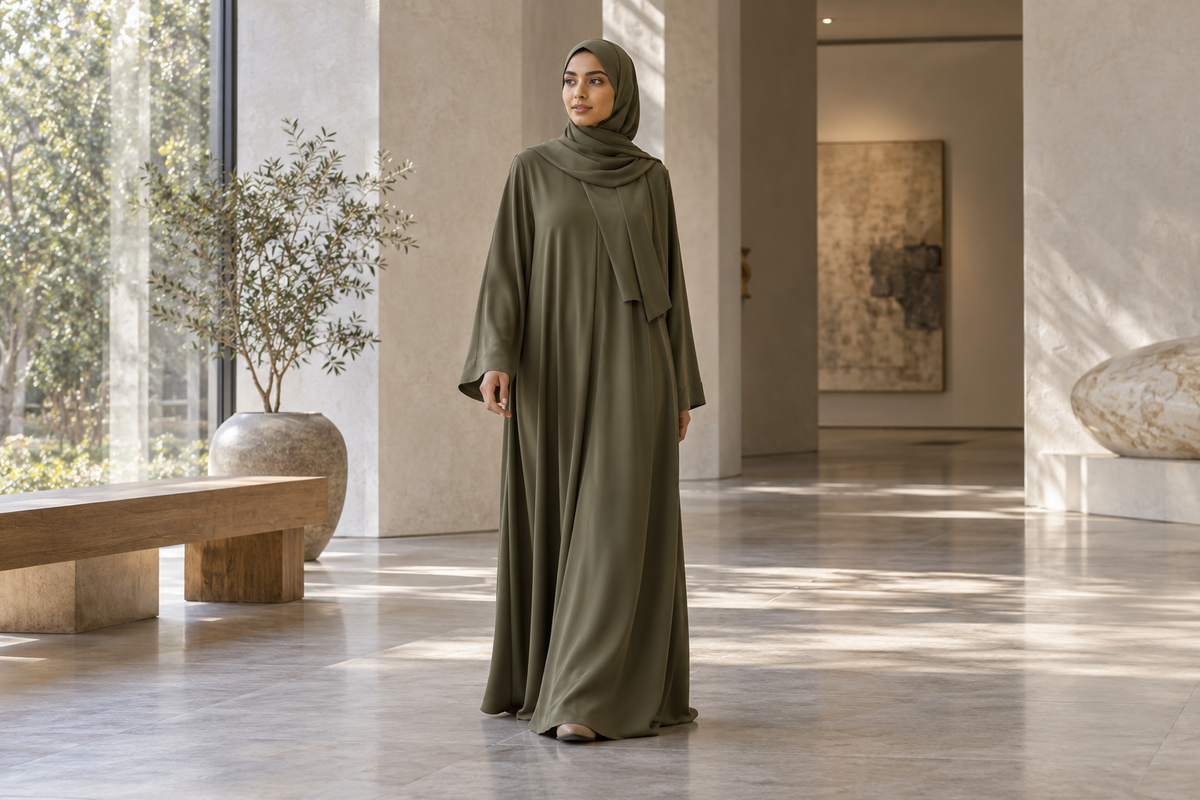
Article: What to Look for in a Well-Made Abaya
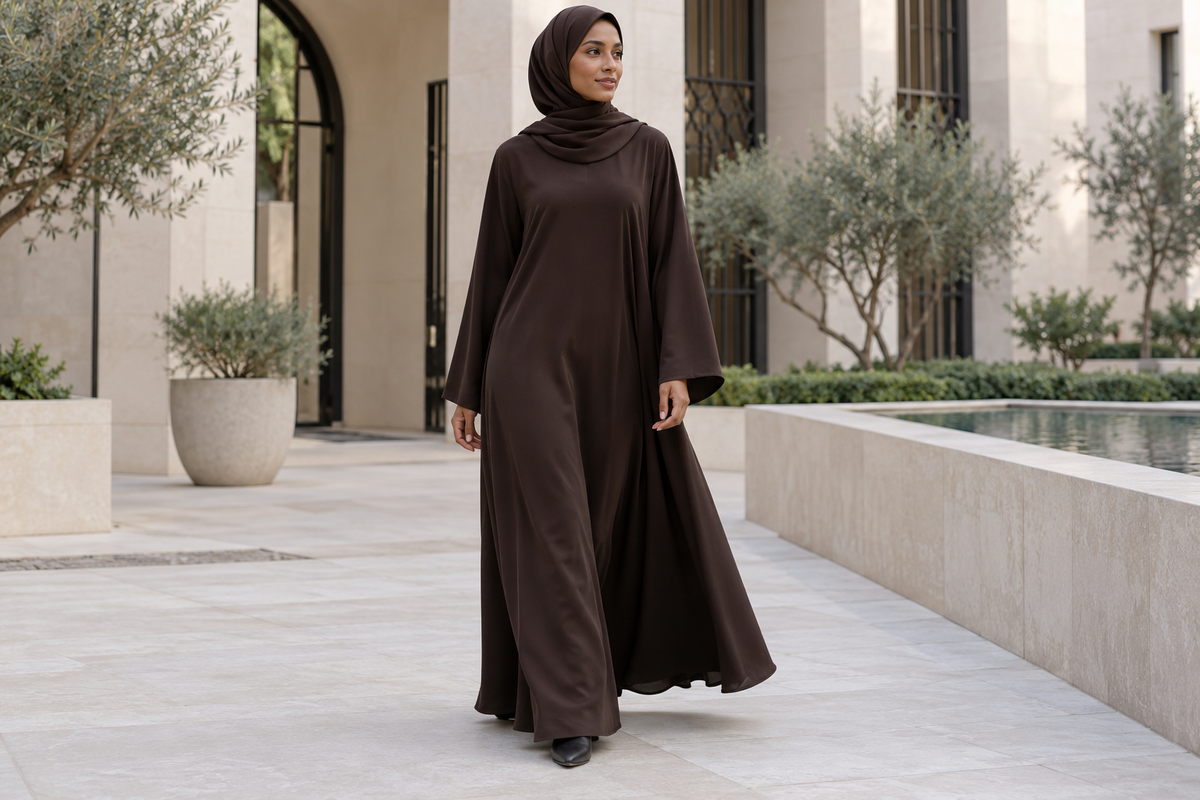
What to Look for in a Well-Made Abaya
A well-made abaya should feel considered in use: the sleeves allow you to reach, the hem falls evenly and the fabric moves without catching or pulling. Those qualities are easy to overlook beside striking embroidery or a beautifully styled photograph. Before buying, look at how the whole garment works together.
Price can help establish your budget, but it cannot settle the question of quality. Nor can a fabric name, a country-of-origin label or a single impressive detail. The useful question is whether the construction suits the design and the way you intend to wear it.
Begin with the silhouette
Look at the abaya from the front, side and back. A relaxed cut should have room without relying on awkward excess fabric; a more defined shape should still allow comfortable movement. Check whether the shoulder position and sleeve shape belong to the intended design. A dropped shoulder, for example, should not be judged by the same visual rules as a tailored sleeve.
When trying it on, sit, walk and reach forward. Notice pulling across the upper back, pressure around the armholes or a closure that strains. Try the layers and footwear you expect to wear with it. An attractive standing pose tells you little about comfort through a full evening.
Read the seams and finishing
Turn the garment inside out. Look for secure, reasonably consistent stitching, with no obvious gaps, broken threads or unintended puckering. Inspect the underarms, cuffs and areas around fastenings, where construction has practical work to do. The hem should look even when the garment hangs naturally.
There is no single seam finish that every good abaya must have. An enclosed French seam can suit fine woven cloth; an overlocked finish can be appropriate elsewhere. What matters is that the finish suits the material, controls fraying where necessary and avoids uncomfortable bulk. Technical guidance from Coats and American & Efird shows why thread, tension, fabric and stitch choice must be considered together.
Check buttons, press studs and zips gently. They should operate comfortably without pulling the surrounding cloth out of shape. A neat fastening is useful only if it also works reliably.

Consider the fabric and embellishment together
Fabric should support the intended silhouette. A fluid cloth may create soft movement, while a firmer one holds a more defined shape. Neither is automatically superior. Touch can reveal surface roughness or stiffness that photographs conceal; it cannot establish how the fabric will perform after repeated wear or cleaning.
Assess coverage in ordinary daylight, including the sleeves and areas stretched over the body. Ask whether the garment is lined, whether a separate slip is included and what additional layering the design requires. A lining can improve coverage or comfort, but its presence alone does not prove quality.
For embroidery, look closely at attachment, loose loops and any distortion in the surrounding fabric. Consider whether embellished cuffs will catch on jewellery or feel heavy during wear. Backing can be a legitimate part of machine embroidery; a tidy reverse is more informative than an unsupported claim that every thread was worked by hand.
Know the limits of the online listing
Seek clear front and back views, detail photographs, garment measurements, fibre information and specific care instructions. If something matters to your decision—opacity, sleeve width or how a fastening closes—ask before ordering. A short movement video can clarify drape, although lighting and styling still influence what you see.
Photographs cannot confirm seam strength, colourfastness or long-term durability. Treat them as useful evidence alongside precise information, then inspect the garment on arrival within the retailer’s returns conditions. Explore our Abayas collection with those questions in mind: choose the piece whose shape, finish and care requirements make sense for your wardrobe.