Abaya Fabrics Explained: Choosing the Right Material
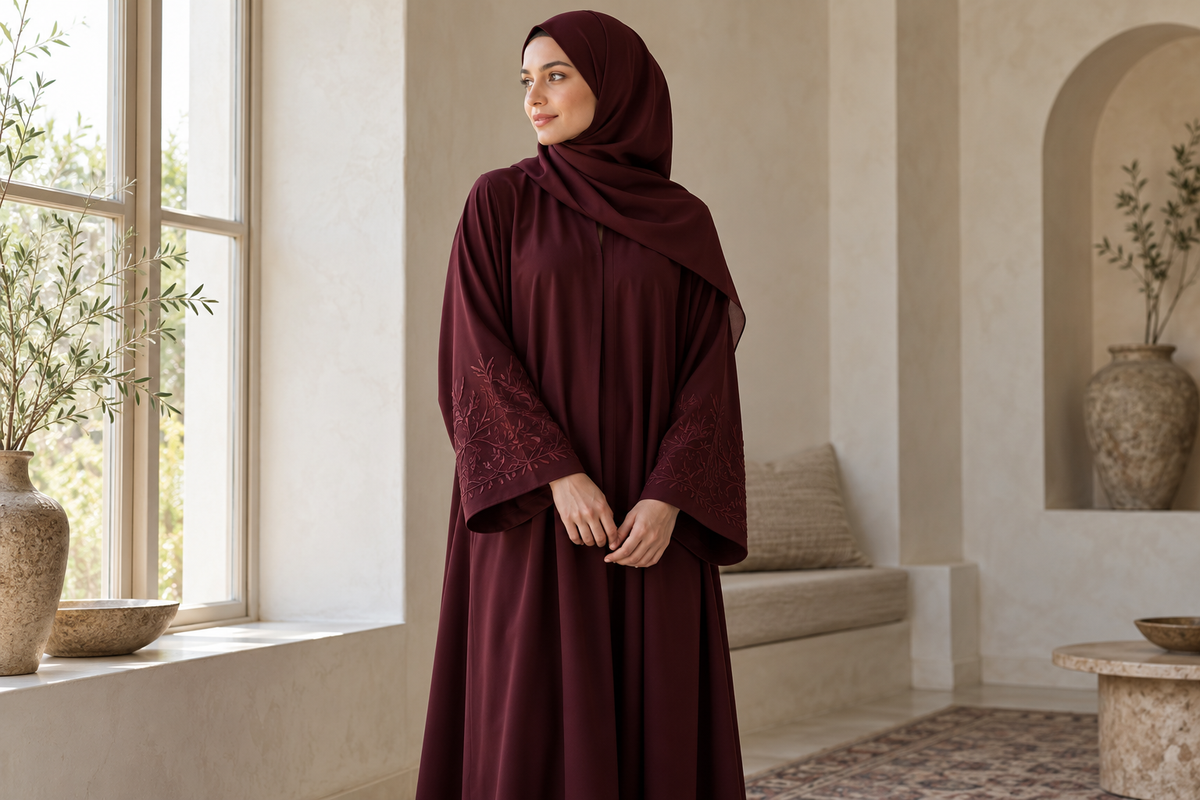
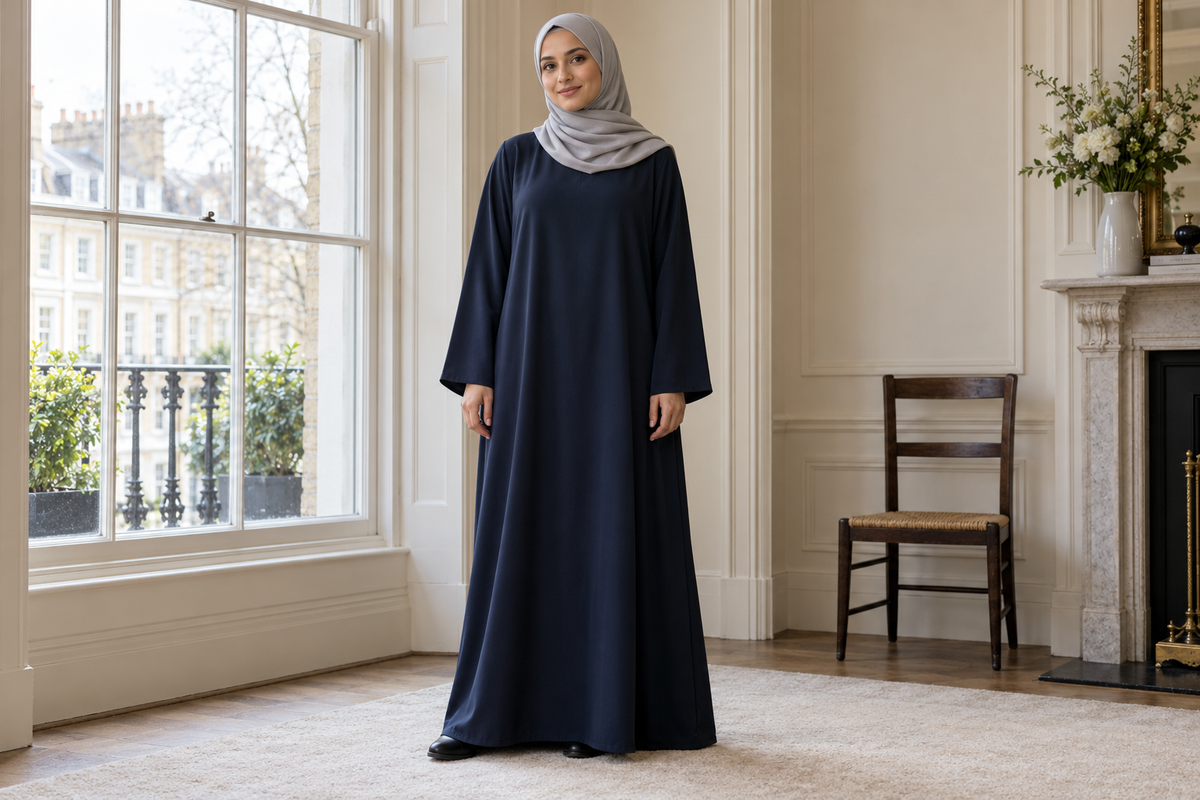
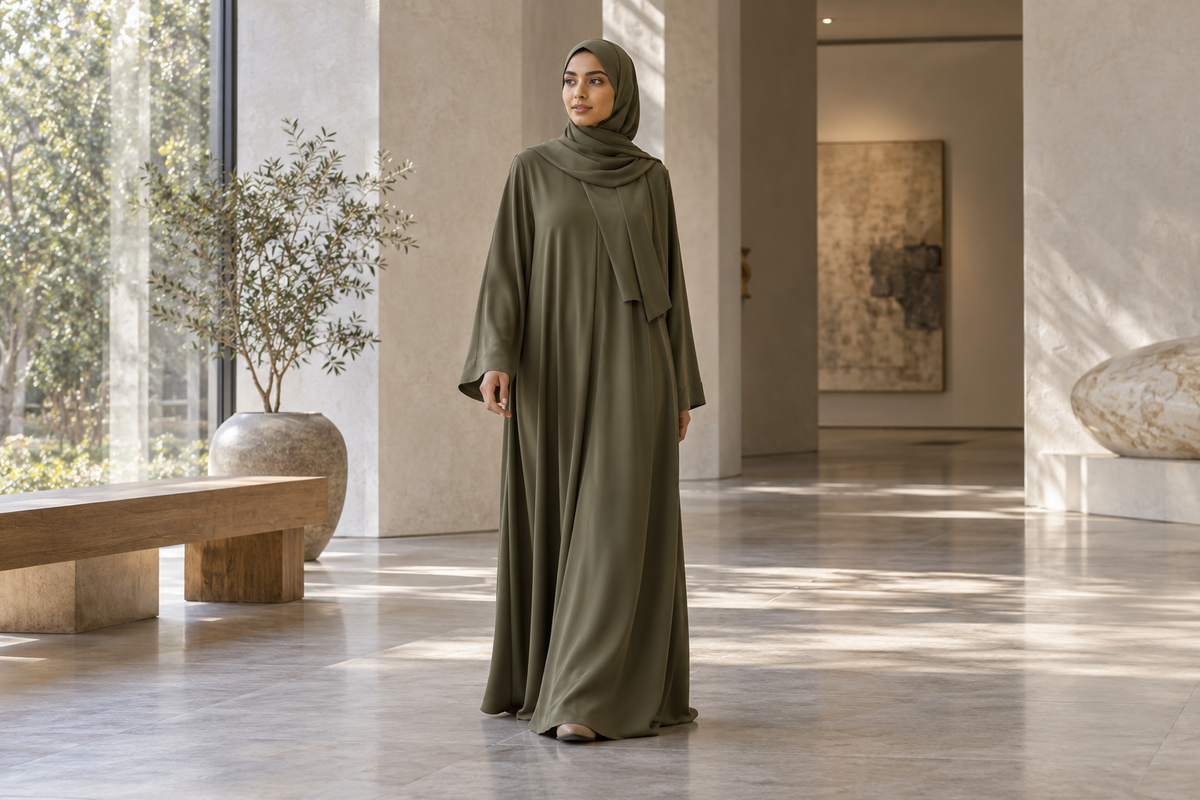
Two abayas can share a fabric name and feel quite different to wear. One falls close to the body; another holds a broader shape. A softly lit photograph may make both look opaque, although only one provides the coverage you want without another layer. Choosing well begins with reading beyond the name.
Start with fibre, then consider construction
Cotton, silk and polyester identify fibres. Chiffon, georgette, satin and crepe describe other aspects of the cloth, including its construction or surface character. A satin can be silk or polyester; crepe appears in several fibre compositions and weights. Look for the actual fibre percentages rather than treating a familiar fabric name as a complete specification.
Weight and drape also answer different questions. Weight describes how much a given area of cloth weighs, often expressed as grams per square metre. Drape describes how it hangs. A heavier fabric can fall fluidly, while a very light one can hold a crisp shape. Neither quality alone establishes how comfortable or well-made an abaya will be.
Crepe and Nida: ask for the detail
Crepe often has a subtly textured surface, but the family includes smooth and more noticeably grainy cloths. A fluid, matte crepe may suit an understated everyday abaya; a firmer version can support a more defined silhouette. Check the fibre composition, stretch, weight and lining rather than assuming all crepes behave alike.
Nida is commonly used in abaya listings, frequently alongside polyester composition information. It should not replace that information. Ask what the particular cloth contains and how the finished garment falls. Descriptions such as “premium” or “Korean Nida” do not, by themselves, establish breathability, manufacturing origin or durability. A precise specification is more useful than a hierarchy of impressive names.
Chiffon and georgette: plan the layers
Chiffon is generally light and sheer; georgette commonly has a more textured, crepe-like surface. Both can create movement in an outer layer, and both are sold in different fibres. Do not assume that georgette is opaque, or that a dark colour removes the need for an underlayer.
For an open abaya, consider the complete outfit: the outer garment, inner dress and sleeves. Ask which pieces are included and whether the lining extends through the areas where you need coverage. Extra layers change the outfit’s feel as well as its appearance. A delicate outer cloth is not necessarily the coolest choice once a substantial slip is added.

Satin and cotton blends: choose the effect
Satin’s smooth, lustrous face can give an occasion outfit a clear visual focus. Consider whether you prefer that reflection or a quieter matte finish. Sheen does not tell you the fibre content, thickness or opacity; request those details separately. Nor should a photograph be used to identify silk by sight.
Cotton cloth ranges from fine, semi-sheer voile to more structured weaves. In a blend, the other fibres and the fabric’s construction affect its behaviour. If creasing matters to you, ask about the particular garment rather than expecting every cotton blend to resist wrinkles. Think about the finish you enjoy wearing and the care it will require.
Make the decision practical
“Breathable” needs context. Air movement, moisture transfer, the garment’s cut and the layers beneath it all matter; one fibre name cannot describe the whole experience. Look for clear fabric notes and movement photographs or video, while recognising that a screen cannot convey touch or test performance.
Before choosing, establish composition, coverage, layering and care. Follow the finished garment’s care label, especially where embroidery or trims introduce further restrictions. When browsing our Abayas collection, use those questions to find a cloth that suits your days, your preferred silhouette and the way you look after your clothes.