Finding the Right Abaya Fit When Shopping Online
The size you usually buy is a useful starting point, but it is not enough to choose an abaya online. Length, room through the body and the shape of the sleeves all contribute to fit. A few considered measurements can make the difference between a garment that merely fastens and one you enjoy wearing.
Establish your measurements
Use a flexible, non-stretch tape and stand in your normal posture. Measure over the underwear you would ordinarily wear, or close-fitting clothing that adds little bulk. Keep the tape level and comfortably close without pulling it into the body. A mirror helps you check the back; another person can make shoulder and length measurements easier.
Record your fullest bust, natural waist and fullest hip measurements, following the retailer’s instructions about where to measure. Lower your arms when reading the bust measurement. Write down the units and date, and remeasure when your fit needs change. Avoid adjusting the figures towards a size you expect to wear: they are information for choosing clothes, not a judgement about your body.
Read what the chart is measuring
A body chart describes the person a size is intended to fit. Finished garment measurements describe the clothing itself. They are not interchangeable. A relaxed woven abaya normally needs additional room for movement and for its intended shape; choosing a garment whose circumference simply matches your body can remove both.
Check whether a listed bust figure is a full circumference or a flat width measured across the garment. Do not compare one directly with the other. If the method is unclear, ask the retailer to explain it. There is no single allowance that makes every abaya fit well: the cut, fabric, lining and layers beneath it change the decision.
Choose the length you will actually wear
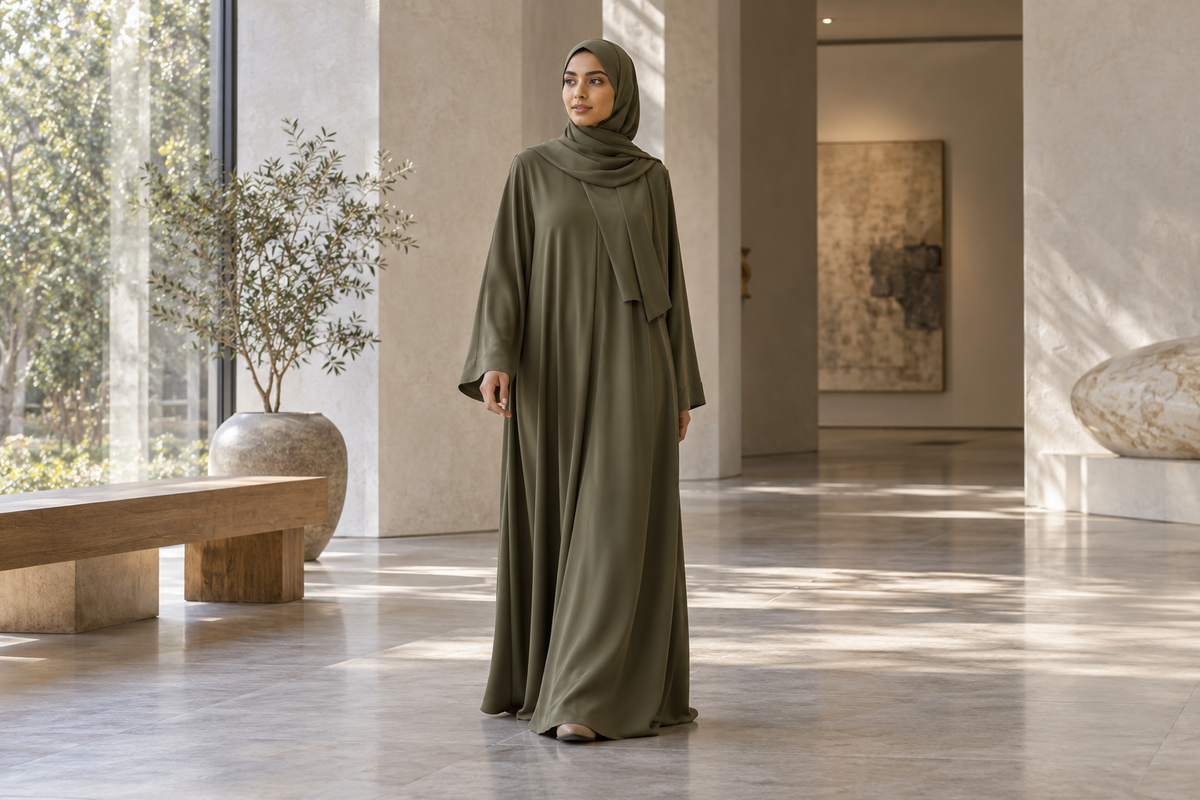
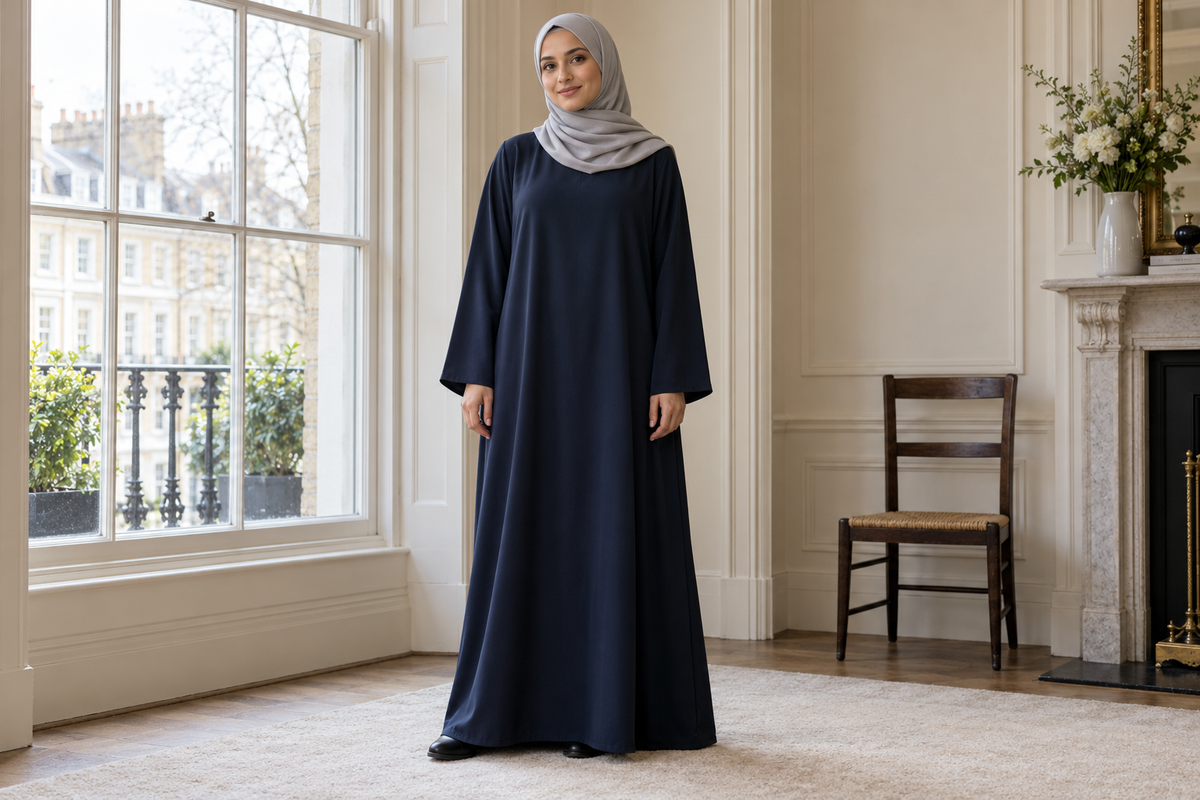
Treat a height chart as an initial guide, then look for the garment’s stated length and measurement method. Abaya labels such as 52 or 56 do not guarantee identical dimensions across brands. Some ranges also change width as the length increases; others offer separate size and length choices.
Measure a similar abaya or long dress that already falls where you like it, using the same starting point as the listing. For a shoulder-to-hem measurement, check exactly where on the shoulder the retailer starts. Consider the shoes you intend to wear and whether you prefer an ankle-skimming or longer finish. A hem that trails underfoot can be inconvenient even when the standing photograph looks beautiful.

Check shoulders, sleeves and movement
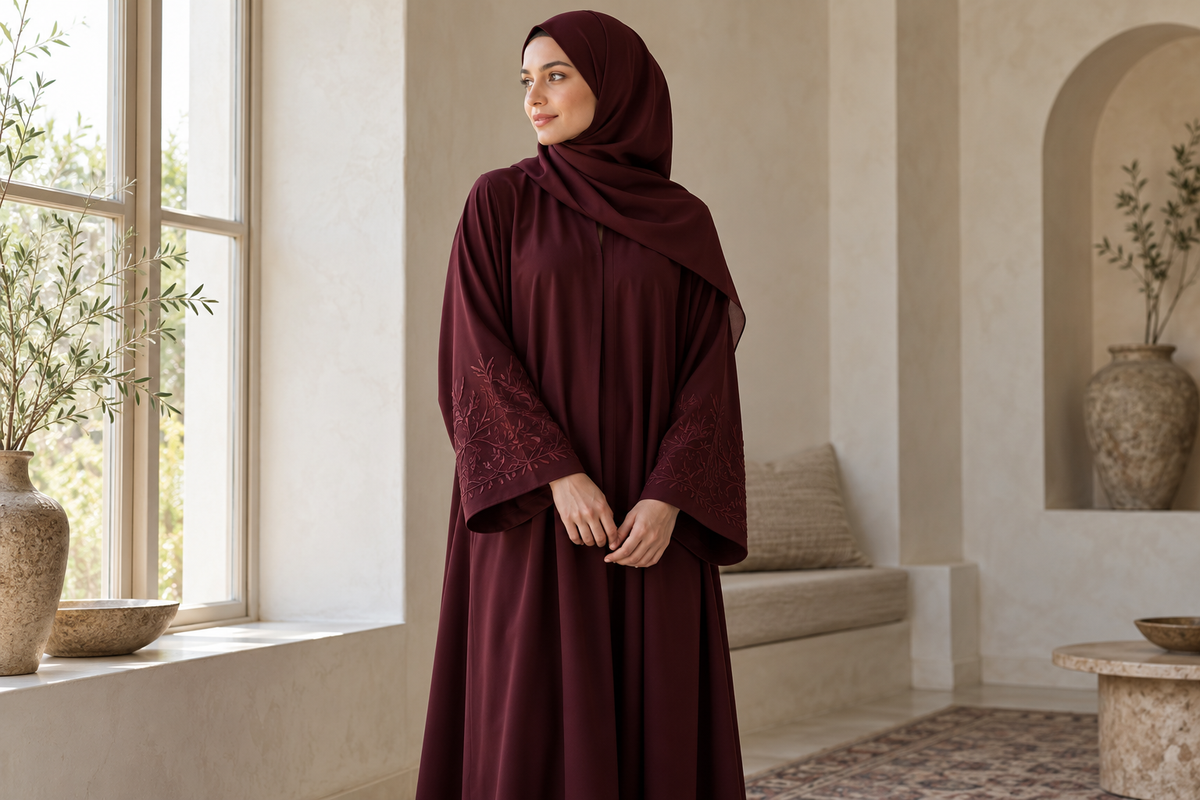
A defined shoulder and a dropped shoulder are different designs. In the latter, part of the sleeve’s apparent length sits beyond the natural shoulder, so a sleeve figure alone may be misleading. Look at the full shoulder-to-cuff relationship and ask for further dimensions where necessary.
For a structured cut, pay attention to the upper back, armholes and upper sleeves. A generous skirt does not compensate for restriction there. Think about reaching forward, sitting comfortably and wearing your usual underlayers. Product photographs can show the intended shape, but a model’s height and size cannot establish how the same garment will fit your proportions.
When you fall between sizes
Avoid an automatic instruction to size up or down. Compare the areas where the design is closest to the body, the available garment measurements and the fit you prefer. If extra width also brings unwanted length, ask whether another cut would serve you better. Do not assume an embroidered cuff or border can be shortened easily.
Consult our Size Guide alongside the individual product details. If a figure or measurement method needs clarification, contact us with your measurements and the exact style before ordering. The best size is the one that gives the garment room to work as intended, with a length and freedom of movement that suit your life.