Caring for Embroidered Abayas: A Considered Guide
An embroidered abaya asks for a little attention before it asks for cleaning. The first signs worth noticing are often small: a thread catching at the cuff, a mark near the hem, a fastening beginning to loosen. Looking closely after wearing gives you time to respond without turning a minor issue into a larger repair.
The right routine depends on the complete garment. A washable outer fabric does not establish that its lining, decorative threads or attached embellishments can tolerate the same treatment. Nor does a lustrous thread reveal whether it is silk, rayon, polyester or a metallic construction.
Begin with the label
Read every instruction, including drying, ironing and professional-cleaning restrictions. GINETEX explains that care recommendations account for sensitive components as well as the main fabric. A general fabric guide cannot replace those instructions.
Photograph the label while it is legible and keep any product-specific guidance. If the label is missing, unclear or conflicts with the product page, ask the retailer before applying water, detergent or steam. Tell them which style you own; instructions for another abaya may not apply.
Where washing is expressly permitted, follow the stated method, temperature and drying instructions. A machine’s delicate setting does not automatically make a hand-wash-only piece machine washable. Likewise, a laundry bag can reduce contact with other garments but cannot make an unsuitable cleaning method safe.
Treat decoration as part of the garment
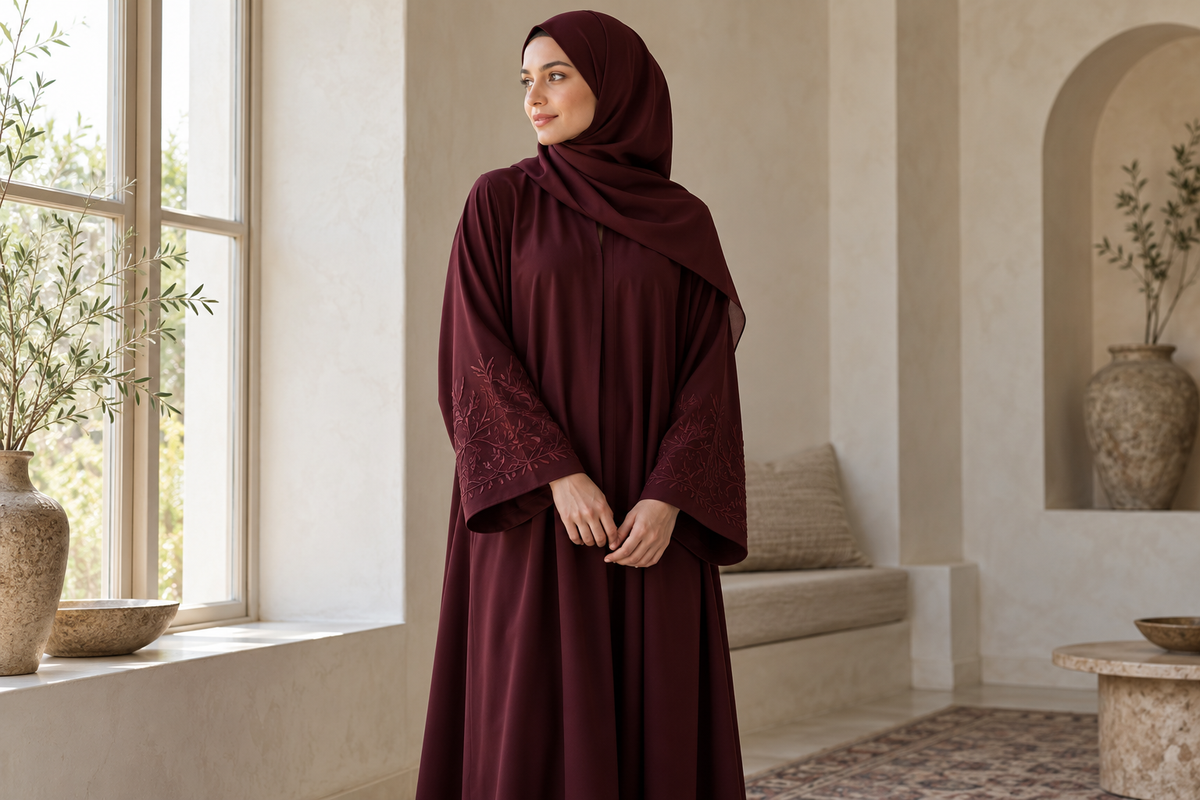
Embroidery may be firmly stitched into the cloth, raised above it or accompanied by beads, sequins and decorative trims. These differences affect how a piece responds to friction, moisture and pressure. Thread manufacturers publish different care allowances for different products; there is no single rule for all embroidery.
Take care with rings, bracelets and bag hardware when dressing. If something catches, stop and gently release the contact rather than pulling the garment away. Do not cut a loose loop simply to make it disappear: it may belong to a longer line of stitching. Keep any detached decoration and ask a skilled repairer to assess the area.
Know when to leave cleaning to a specialist
A stain on a delicate, heavily embellished or dry-clean-only garment is a reason to seek advice promptly. Avoid rubbing the surface or working through a succession of household remedies. Even local treatment can affect dyes, finishes and neighbouring decoration.
Choose a cleaner experienced with embroidered and embellished clothing. Show them the care label, existing snags and any loose attachments; explain what caused the mark and whether you have already treated it. Ask how they will assess the complete garment before choosing a process. Professional dry cleaning is not automatically suitable for every trim or adhesive.
Heat deserves the same caution. Do not press directly onto raised embroidery or embellishments. Steam is not a universal alternative to ironing: consult the garment’s instructions, and leave uncertain finishing to a specialist rather than experimenting immediately before an occasion.

Store with the weight supported
Before putting the abaya away, inspect it and make sure it is clean and fully dry. Keep it away from direct light, damp and crowded surfaces where decoration can catch against neighbouring clothes.
A sound, relatively light garment may suit a correctly sized padded hanger. Heavy embellishment or weakened shoulders may require supported flat storage instead. Conservation guidance recommends minimising sharp folds and supporting vulnerable areas; ask for advice if the garment’s weight makes the choice unclear.
For questions about an individual Fozia Arif piece, contact us with the product name and a photograph of its label. The most useful habit is simple: notice changes early, preserve the label and let the garment’s construction determine its care. That leaves fewer decisions to chance, and more opportunities to enjoy wearing it.